
English
Views: 0 Author: Site Editor Publish Time: 2026-07-21 Origin: Site


Securing facility perimeters requires absolute vigilance at every checkpoint. Security teams face immense pressure when inspecting vehicle undercarriages. Low ground clearance and poor lighting create high-risk blind spots in these areas. Missing a concealed threat in these dark cavities can compromise entire facilities.
For decades, traditional inspection mirrors served as the primary tool. However, they rely heavily on ambient light. They also require awkward physical maneuvering from security staff. This leads to severe operator fatigue over long shifts. It ultimately results in severely compromised threat detection.
We will explore how transitioning to a Telescopic Inspection Camera bridges this critical vulnerability gap. You will learn the core evaluation dimensions for procurement. We will show how these systems outperform unreliable manual mirrors. Ultimately, this guide helps you secure your perimeter effectively without needing cost-prohibitive fixed infrastructure.
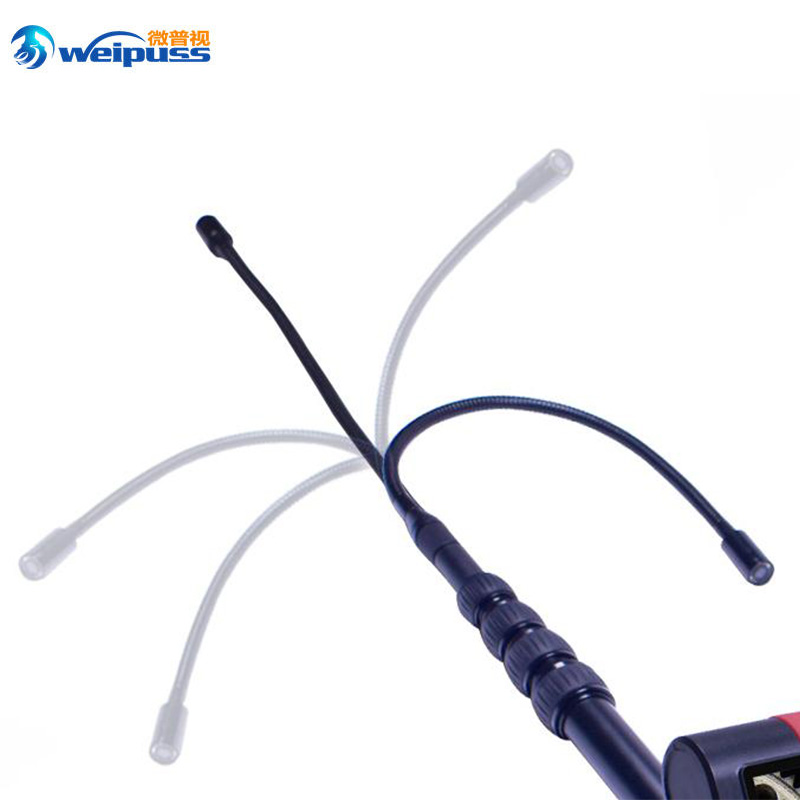
Telescopic inspection cameras eliminate undercarriage blind spots through integrated IR/LED lighting and articulating camera heads.
Key evaluation criteria for security procurement include IP-rated waterproofing, monitor sunlight readability, and pole weight-to-reach ratios.
While fixed UVIS systems suit permanent, high-traffic gates, telescopic cameras offer mandatory tactical mobility for VIP protection, temporary checkpoints, and varied vehicle heights.
Selecting a reputable telescopic inspection camera supplier requires vetting their warranty terms, compliance certifications, and replacement part availability.
Security perimeters remain highly vulnerable when teams rely on outdated equipment. Manual inspection mirrors have existed for decades. They fail to meet modern threat detection standards. Their design inherently limits what an operator can actually see. We must examine exactly why these legacy tools create dangerous security gaps.
Mirrors suffer from severe lighting and visibility constraints. They physically cannot illuminate deep cavities behind vehicle axles. They cannot show the dark spaces above skid plates. They fail to reveal the recesses around exhaust systems. Contraband and explosive devices are typically concealed in these exact locations. Ambient light rarely reaches these central undercarriage cavities. Even if a guard uses a handheld flashlight, the reflection often causes blinding glare. The guard only sees flat, illuminated metal rather than structural anomalies.
Operator fatigue significantly impacts compliance and security posture. Continual bending and crouching lead to severe ergonomic strain. Security guards perform hundreds of vehicle checks during a single shift. Human bodies simply cannot maintain peak physical exertion for eight hours. This physical exhaustion leads to rushed inspections. Guards begin taking shortcuts to alleviate their back pain. They skip the deep central cavities. They only check the easily accessible bumper areas. This degrades the overall security posture and invites perimeter breaches.
Manual mirror checks also suffer from a complete lack of documentation. They offer no ability to record suspicious findings. They cannot freeze-frame an image for secondary review. If an operator spots a strange wire, they cannot instantly capture it. They must call a supervisor over to the vehicle. The supervisor must then bend down to look manually. This creates massive traffic delays at the checkpoint. It also completely breaks the chain of custody for incident reporting. Security teams need verifiable digital evidence to justify escalated responses.
Procuring the right equipment requires a structured evaluation process. Not all inspection tools perform equally under stressful conditions. Security managers must look past basic marketing claims. You must evaluate these devices based on strict operational dimensions. We break down the exact specifications required for reliable checkpoint security.
Optical and Illumination Specs: You need high-performance arrays capable of penetrating pitch-black undercarriage recesses. Some checkpoints require infrared (IR) for stealth. Others need high-lumen LED arrays. White LEDs help identify specific wire colors on improvised devices. You also must check the focal length. The field of view (FOV) must be tailored for close-proximity inspection. The camera usually sits just 2 to 10 inches from the target. A wide FOV prevents operators from missing peripheral threats.
Durability and Environmental Tolerance: Checkpoints operate in brutal conditions. The camera head must carry an IP67 or IP68 rating. It must withstand mud, road salt, and direct water exposure. You cannot afford equipment failure during a rainstorm. Temperature resistance is equally critical. Battery chemistry and screen performance often degrade in extreme operational climates. The system must function in freezing snow and blistering desert heat.
Ergonomics and Pole Construction: You must balance extended reach with manageable weight. These poles often extend up to 15 feet. An aluminum pole becomes incredibly heavy at full extension. This causes rapid user fatigue. Carbon fiber offers a much better strength-to-weight ratio. You must also evaluate the joint mechanisms. Look for anti-rotational pole designs. These keep the camera orientation completely stable during lateral sweeps.
Display and Interface Reliability: The operator needs a crystal-clear view. Monitors must be sunlight-readable. They should feature a minimum brightness of 500 nits. Better units push 1000 nits. They also need physical glare shields for daytime operations. You must evaluate battery longevity. Continuous 24/7 gate operations demand hot-swappable battery capabilities. An operator should swap a dead battery in seconds without powering down the entire system.
Facility managers often struggle to choose the right inspection method. Each technology serves a distinct operational purpose. You must understand where each system excels and where it fails. We provide a strategic comparison to clarify this decision logic.
Manual inspection mirrors represent the absolute baseline. They fit low-budget environments. They work best in extremely low-threat scenarios. For example, they might suffice for a quiet private parking garage. However, their drawback is immense. They carry a high human error rate. They offer zero digital capability. They provide a false sense of security at high-risk borders.
Fixed Under Vehicle Inspection Systems (UVIS) sit at the opposite end. These are permanent installations. They scan vehicles passing over them. They suit permanent border crossings. They handle high-volume steady traffic efficiently. However, their drawbacks are substantial. They require extensive civil works to install. You must dig trenches and pour concrete. They are completely immobile. They also struggle with uniquely shaped vehicles. Ultra-low clearance vehicles, like sports cars, often bypass the scanner angles entirely.
Telescopic cameras represent the ultimate middle ground. They offer incredible tactical flexibility. You can deploy them at mobile checkpoints immediately. They are mandatory for VIP motorcades. They handle unpredictable vehicle sizes effortlessly. They excel at secondary deep-dive inspections. Their primary advantage is rapid deployment. They deliver a high return on investment. They provide robust security without massive infrastructure investment.
Below is a summary chart comparing these three primary security approaches.
Inspection Method | Primary Use Case | Major Drawback | Core Advantage |
|---|---|---|---|
Manual Inspection Mirrors | Low-budget, extremely low-threat environments. | High human error rate; zero digital capability. | Lowest initial purchase price. |
Fixed UVIS | Permanent border crossings, steady high-volume traffic. | Immobile, requires extensive civil works, struggles with low sports cars. | Automated scanning with minimal physical operator effort. |
Telescopic Inspection Cameras | Mobile checkpoints, VIP motorcades, unpredictable vehicle sizes. | Requires operator training for systematic sweep patterns. | Rapid deployment, high ROI, tactical flexibility, digital recording. |
Deploying new security hardware requires careful planning. You cannot simply hand a camera to a guard and expect perfect results. Hardware upgrades must align with updated operational protocols. Ignoring rollout considerations leads to immediate implementation risks. We outline the crucial steps for a successful deployment.
Establish Training Requirements: Operators must learn systematic sweep patterns. If they swing the pole randomly, they will miss central cavities. They must learn a structured grid search of the undercarriage. They should start at the front bumper. They should move systematically backward. They must pause at high-risk zones like wheel wells and fuel tanks.
Develop Maintenance Protocols: You must establish daily routines for equipment care. Operators need to clean camera lenses at the end of every shift. Muddy lenses render the system useless. They must check cable integrity at articulation points. Wires can fray if mishandled repeatedly. They must also manage battery charging cycles to ensure readiness.
Manage Environmental Interference: You must anticipate screen glare. Harsh outdoor environments challenge digital displays. You must equip monitors with protective housings. You should utilize physical sunshades during peak daylight hours. Operators must know how to adjust screen brightness to counteract intense ambient light.
Standardize Reporting Procedures: Teams must know when to record video. You should define what constitutes a suspicious finding. Operators must understand how to save the footage to the SD card. They must know the exact protocol for handing that SD card to a supervisor. This preserves the digital chain of custody.
Failing to address these rollout factors wastes your investment. Proper training ensures operators embrace the new technology. When they realize the camera saves their back and knees, they adopt it quickly. Clear protocols transform a simple camera into a comprehensive security system.
Hardware specifications only tell half the story. The company behind the equipment matters just as much. You must vet your vendor thoroughly. A poor vendor leaves you stranded when equipment breaks. A reliable partner ensures your checkpoints stay operational year-round.
First, differentiate between commercial-grade and consumer-grade equipment. The market is flooded with fragile consumer endoscopes. These are meant for inspecting household plumbing. They cannot survive a border checkpoint. You must ensure the equipment features reinforced joints. The cables must be shielded. The monitor housing must resist impact. Real security equipment feels rugged. It uses industrial components designed for thousands of deployment cycles.
Next, examine post-sale support and RMA processes. You must verify that the Telescopic Inspection Camera supplier offers clear warranty terms. What happens when a truck accidentally backs over a monitor? You need rapid turnaround for damaged poles or screens. Ask the supplier about their repair timelines. Do they keep spare parts in local warehouses? You cannot wait six weeks for an international shipment while your gate remains vulnerable.
You must also assess customization and scale. Multi-gate facilities have diverse needs. Ask if the supplier can provide varied pole lengths. Some gates need 10-foot poles. Others need 15-foot extensions. Look for modular camera heads. Operators often benefit from switching between flexible and rigid necks. Furthermore, ask about bulk procurement pricing. Upgrading an entire facility requires significant capital. A good supplier will structure pricing to accommodate large-scale deployments.
Finally, verify compliance and supply chain transparency. Many government and military procurements mandate strict rules. You may need to verify NDAA compliance. You must ensure the internal chips and software originate from approved regions. Request technical documentation upfront. A trustworthy vendor will proudly share their certification testing reports. They will transparently prove their IP ratings and operational temperature claims.
Securing facility perimeters demands reliable, verifiable tools. We established that traditional manual mirrors fail to provide adequate visibility. They cause severe physical fatigue and offer zero documentation. Fixed UVIS solutions remain highly effective but lack mobility and require massive infrastructure investments. A telescopic inspection camera is the necessary upgrade. It provides security teams with verifiable, well-lit, and ergonomically safe under-vehicle screening.
Your next steps involve immediate action. Security managers should audit their current checkpoint environments. Assess your daily traffic flow, vehicle types, and ambient lighting conditions. Reach out to short-listed suppliers to request demo units. You must test display visibility and pole weight in your exact real-world conditions. Empower your security personnel with tools that genuinely protect your perimeter.
A: Yes, most commercial-grade units feature DVR capabilities. They capture both video and high-resolution still images via an SD card. This functionality proves vital for incident logging, secondary reviews, and maintaining a strict chain-of-custody documentation trail.
A: The camera head should carry at least an IP67 rating. This ensures it can handle road splash, mud, and heavy rain without failing. The monitor unit should ideally be IP54 or higher to withstand dust and light moisture at the checkpoint.
A: Standard lithium-ion systems generally yield 4 to 8 hours of continuous operation. High-traffic checkpoints should always procure units featuring removable, hot-swappable batteries. This guarantees zero downtime during busy shift changes.
A: White LEDs offer excellent color detail. This helps operators identify specific fluid leaks or colored wires on IEDs. IR provides stealth and glare-free illumination in total darkness. Many high-end models offer both lighting modes for maximum tactical flexibility.


